The most memorable episodes in human history are written in blood, guts and gore; just ask any kid. It’s a truism that author Terry Deary has been demonstrating in spectacular fashion for thirty years since the first volume of Horrible Histories was published in 1993. With more than 30 million book sales in some 30 different languages, Deary has been dubbed the most influential historian of our times and for three decades his closest partner in grime has been illustrator Martin Brown.
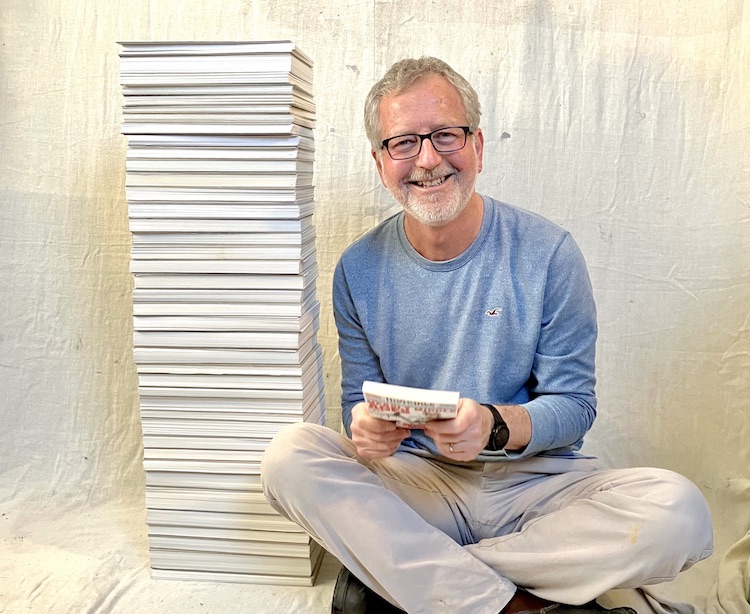
“It’s still mind blowing when you think about it,” says the amiable Aussie over a hearty lunch at his local, the reliably excellent Anchor Inn on the Cross at Shapwick, home to Martin, wife Sally and their daughters Emily and Bella for the best part of 25 years.
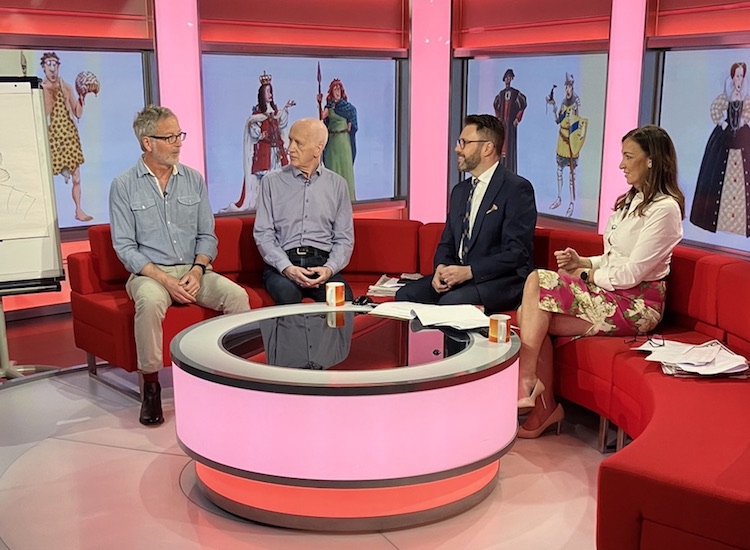
“It started with four people sat at a table – Terry and I, an editor and art director – scribbling notes and doodling and making each other laugh. And now we’re marking the thirtieth anniversary by doing things like spending the best part of two days getting to and from Manchester to do seven minutes on the BBC Breakfast sofa – like that’s just what you do. How did that happen?”
It happened because, with its trademark blend of facts and jokes (and a fair bit of poo!), Horrible Histories is among the most successful franchises in modern publishing. The first books followed the National Curriculum and established a style that runs throughout more than 70 titles, as well as magazines, audio books, TV series, stage shows, physical and video games, all manner of merchandise and the 2019 feature film Horrible Histories: The Movie – Rotten Romans.
This year saw the publication of another compilation, The Worst in the World packed with Gold, Silver and Bronze entries for the most horrible of everything in history. It was met with rave reviews and sales to match demonstrating the reading public’s appetite for such deviously educational antics is as ravenous as ever.
“It just keeps on going,” sighs Martin. “In one sense we’ve created a monster and now we must feed it, but there have been times when we’ve thought it was coming to an end, only for it all to get going again. And it’s international. For instance, Lithuania was taking every title – I can understand Rotten Romans and Groovy Greeks perhaps, but Slimy Stuarts?
“When people ask about what we do and why it works, our semi-serious answer is that Terry is accused of being the historian and I’m accused of being the illustrator, but really, Terry is a storyteller and I’m a cartoonist. Terry brings historical facts and stories to life; I write gags and draw funny pictures. I can’t pretend it’s not fun because it is!”
These days, the Horrible Histories franchise requires a team of people to take care of the sheer volume of creative work. Blandford-based comics artist Rob Davis adds the colour and illustrator Mike Phillips finishes the line work on some of Martin’s drawings, most recently for Horrible Histories: Ghosts and On the Road.
“They’re steeped in the Horrible Histories style so that removes any sense of ‘marking’ someone else’s work and because Rob works digitally it means that when, say, we need a set of figures for a game or something on TV we’ve already got digital files they can work with.
“I could work on Horrible Histories all day every day for the rest of the year and still not get it all done. So I’ll probably do something most days – I’m going to start on some roughs today. There are things that I can’t talk about, but we’ve done a few city books in the past and new ones are on the way; maybe we should do some county books as well?”
Why not, indeed? There’s no shortage of horrible history in Dorset to work with and Horrible Histories: Crackin’ Castles features both Maiden Castle and Corfe Castle, so watch this space.
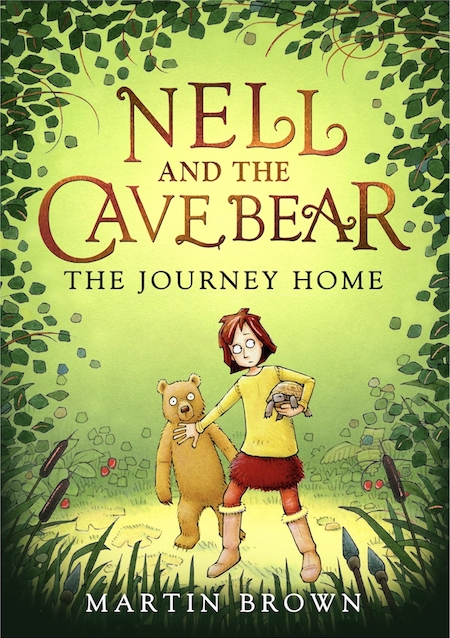
However, central to Martin’s sense of all being right with the world is that he has creative outlets other than Horrible Histories. His two volumes of Lesser Spotted Animals illuminate such brilliant beasts as the zorilla, altai argali, ili pika and numbat – creatures great and small that are routinely overshadowed by more familiar fauna – were followed by his first venture into fiction, Nell and the Cave Bear and its sequel Nell and the Cave Bear: The Journey Home that came out in March.
“Lesser Spotted Animals hasn’t been a huge success, but I still love the idea of shining a light on some of those unknown members of the animal kingdom. We all know about the plight of the panda but how can you help protect a different creature if we don’t even know it exists?
“Nell came from an idea I had for a graphic novel-style picture book that told the story of the Stone Age through the eyes of a little girl. Eventually it became clear that her story was more interesting than the history and my friend the totally amazing children’s author Angela McAllister, who lives in Shaftesbury, encouraged me to expand the story with words since I had already plotted everything pictorially.
“I really enjoyed the writing of it and as I already knew what was going to happen next, it was perfect for the two-book deal I signed. Now I want to do another one. I have no idea if they’re any good, although people say it’s sweet and simple and that feels like a good thing.
“I turned 64 this year and I keep thinking my dad was retired by this age, but no matter how much I think I like the ideas of days off or weekends away, I’m not done yet; there’s loads more I want to do.”
Bottom drawer!
Ahead of our meeting Martin set what sounded like a simple enough task – draw a horse from memory then straight after draw another horse, but after looking at photographs for reference.
Here are the results. Shocking. But then I can’t draw.
“Except that you can. You’ve drawn a recognisable horse. Twice.” notes Martin, with a welcome degree of kindness. “The second drawing looks more like a real horse and that’s because you looked at a picture of a horse before you drew it and drawing realistically is no more than transferring what you see from your eye to the page.
“But drawing a horse is, to use a technical term, really hard.”
It turns out there is no magic wand or mystical skill that can be imbued. As Martin explains, the simple truth is that drawing is all about technique and practice. Lots of practice. But the practice can be fun.
“We do plenty of things badly because we enjoy them. I’m rubbish at dancing but I love it. Or singing in the shower. This evening a group of middle-aged blokes will scuttle around the basketball court doing an impression of playing five-a-side football – we do it because it’s a hoot, not because any of us plays like Ronaldo.
“You can have fun playing three chords on a guitar and if you enjoy it you can learn to play more. Nobody is born a cordon bleu chef. And it’s the same with sport. I don’t think talent comes into it until you’re right at the top, it’s that tiny bit extra that makes the very best even better.”
So, if there’s little or no innate talent, how has Martin turned making lines on pieces of paper into daily bread with such success?
“I was largely self taught thanks to a book my mum gave me that was published in 1939. I picked up things from other books and various art teachers, but most of what I know came from that book – it takes you from drawing a wobbly circle on day one to showing you how to make really complex drawings that show reflections on an elipse for instance – tricky stuff.
“When I was young, I drew like everyone else – badly drawn aeroplanes and faces – but as I loved drawing so much, I kept going, and developed a vague ambition to make a living at it.”
Finally, how about a little encouragement for us undisciplined doodlers?
“You hear a lot about drawing being good for our wellbeing and it certainly is – it makes us better at looking. The eyes are powerful things.
“I do this thing when I’m asked to give talks about drawing and it’s aimed at the dads. I ask them to promise me that the next time they’re on holiday they’ll take ten minutes and look at the view from the hotel room balcony or wherever, and draw it. I guarantee it will be tosh – the boats will look like bathtubs, the people will be little stick things, the perspective will be off – but put it in a drawer and in five, ten years time when it surfaces again it will bring back that view in every detail because rather than just taking a quick snap with your phone, you really looked.”
• First published by Dorset Magazine.