Imagine travelling by car, by boat, and on foot from west Dorset to the same spot at Shard Point on Brownsea Island, not just once but once a week, every week, for a full calendar year. That is what artist Sarah Hough did, to contemplate and respond in art to the environment she found there. It was no small effort, but in Sarah’s book neither was it evidence for the cod-philosophy that claims it is necessary to suffer for one’s art.
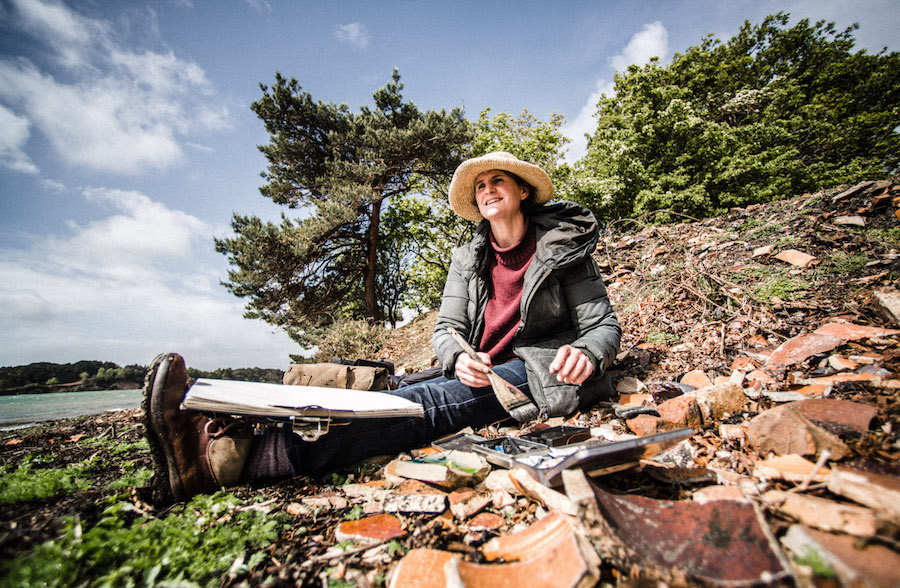
‘Definitely not,’ she says. ‘I really liked the discipline of it all and found it freed my mind of everything else. I love the weather whatever it’s doing and I think that mind-set has become part of what I do – the fact I can embrace unpredictability and look to somehow capture that in my work.
‘As we know, Thomas Hardy can be generally pretty miserable, but he has a wonderful way of capturing weather in words that I really like. That is so much a part of Dorset for me.’
The twelve sketchbooks – one for each month – that Sarah filled with drawings and watercolour paintings informed a set of stately oil paintings five metres long and two metres tall on canvas that were stretched and fitted to curved panels to form the centrepiece of her exhibition Moment that was last seen in the summer of 2019 in a three-month show at Lighthouse, Poole. Soon after, the world was forced to stand still in the face of Covid and subsequent plans that ranged from incorporating the work into a touring production of Wuthering Heights to installing the exhibition in the foyer of London offices were put on hold.
Undeterred, the artist must press on and Sarah has turned her hand to new work, again rooted in her passion for nature and the outdoors.
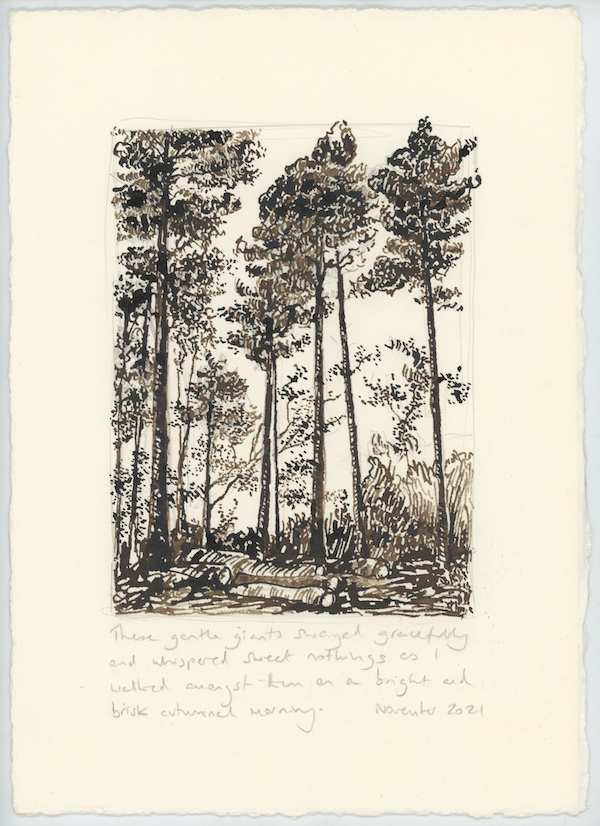
“I’ve been investigating trees and doing a lot of sketching in woods – ink drawings on daily walks through Thorncombe Woods, tree portraits, and a number of commissions. People seem to like my drawings of trees and I like to write a few thoughts underneath each sketch, just what comes to mind and takes me back to the place, to the moment. I like to go out into the natural landscape and work without expectation, allowing nature to guide me, and what I draw or collect, through sound or moving image.
‘I like the idea of mixing media, so bringing in moving images, or sound, or even smell perhaps. I don’t think that painting has to be something that is fixed flat to a wall, and I am always looking for new ways to express what I’m feeling, but am conscious that the use of other media has to be appropriate otherwise it is easy to get bogged down in the presentation and forget about the core of what you’re trying to achieve.’
Indeed, but for all bar a fortunate few, survival remains the imperative that drives us all – artists included.
‘It’s equally important to feed the soul as to feed the body, but there’s something about earning a living from the things you make,’ suggests Sarah. ‘I enjoy having a deadline – make something or go hungry. Do artists make their best work when they’re hungry? I don’t know, but this is a hungry year and the plan is simple – to survive.
‘As a child I wanted to be an artist. I was always making things – endless Blue Peter projects. I used to pinch the Corn Flakes box before they were finished but who could ever afford that double-sided sticky tape? I improvised by folding ordinary sticky tape back on itself.’
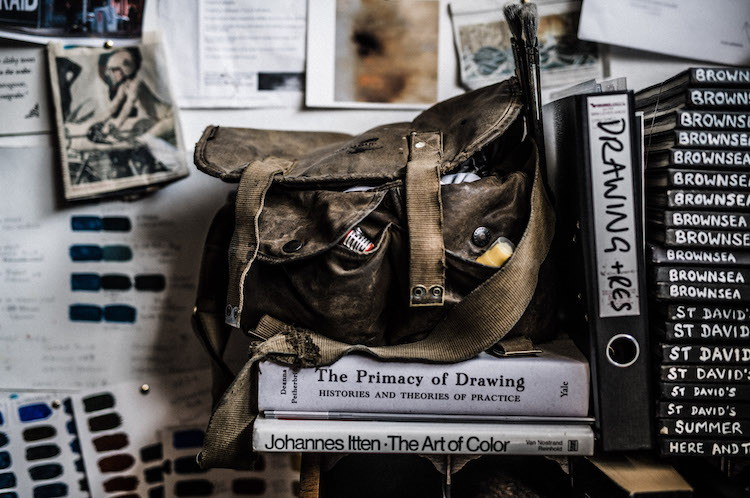
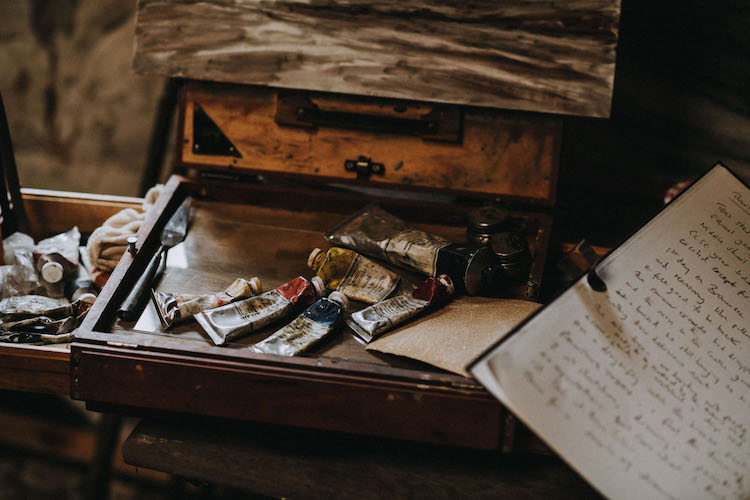
That openness to improvisation has stood Sarah in good stead in the face of the pandemic and as workshops and exhibitions were cancelled, diversification and new ways of working became essential and have brought surprises.
‘I was fortunate to be asked if I would design some pub signs, which has now led to a steady stream of work and an unexpected but wonderful opportunity to be part of the great tradition of hanging pub signs.’
Other commissions close to Sarah’s heart include being asked to capture someone’s favourite walk, view, farm or estate in a book of drawings.
‘It is an enormous privilege to spend time with someone and learn about their connection to a place, its landscape and history. Getting to know somewhere through someone else’s eyes in this way is deeply rewarding.
‘Being an artist is liberating but at times also a little scary. I am fortunate to have been greatly encouraged by many, including Stephen Wrentmore who was Creative Director at Lighthouse. He listened to my idea for Moment, which at the time seemed like an ambitious pipedream, and simply said: “Let’s do it.” He offered me the main gallery for a three-month solo show and believed in my ability to create an immersive experience on a scale I had never attempted before. The experience taught me that, just as it is in life, it’s important to take risks in my work in order to grow, to see what’s possible and to push boundaries. I do like a creative challenge and love the feeling of seeing where the idea ends up, however many twists or turns there are on the way.
‘So maybe it’s good to be a bit vulnerable and be open both failure and success. It has to be about the work. It’s such a fantastic privilege to be able to do what I do. As long as I can spend time in Nature, whatever the weather, and am able to draw, paint and collect sounds, then I’m happy, pretty much.’
• First published by Dorset Life The Dorset Magazine.