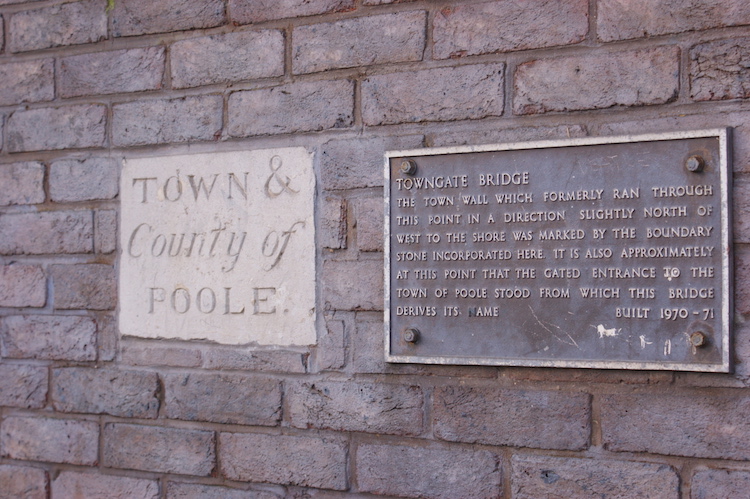
1. Towngate
Surrounded on three sides by the sea, Poole has been an important port at least since its first charter was granted in 1248. As such, it required robust defences and in medieval times those took the form of a large tidal ditch that stretched from Holes Bay to Parkstone Bay. The only landward point of entry or exit was a narrow neck of land just west of the modern railway station. No more than fifty yards wide at high tide it was defended by a stone fortification that became known as Towngate, a name that survives today in the Towngate Bridge flyover where a stone boundary marker uncovered when the bridge was built in 1970-71 is incorporated in one of the supports. The original Towngate was paid for by a grant from Henry VI in 1433 and demolished in 1653 on the orders of the post-Civil War Council of State. An attempt to re-open the ditch was made in 1745 at the time of the second Jacobite rebellion, but was soon abandoned.
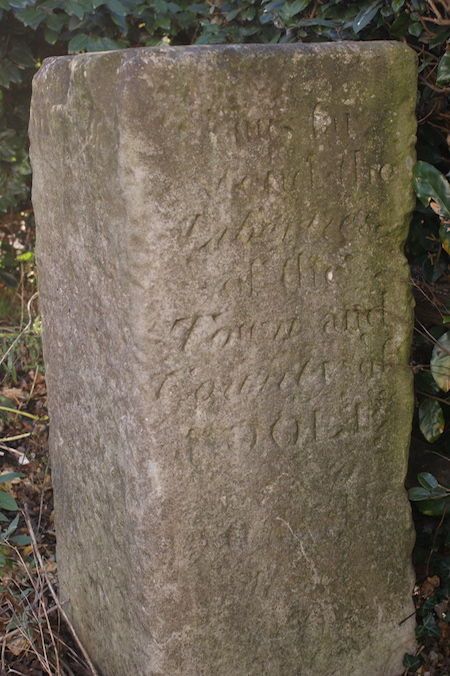
2. Broomhill
Known as the Broomhill Stone and found on the south side of New Quay Road it marks the former boundary between Poole and Hamworthy – the tip of the Hamworthy peninsular having been claimed historically as part of Poole. For centuries, the Mayor of Poole also enjoyed the title of Admiral of the Port as one of the few coastal towns exempt from the jurisdiction of the Admiralty of England and had its own Admiralty Court that was already established by the time of the 1364 Winchelsea Certificate, the oldest known record of Poole’s harbour bounds. The stone takes its name from a parcel of open land that was used for the annual open air meetings of the Admiralty Court that, until its abolition in 1835, met to consider such matters as illegal fishing, acts of piracy and crimes abroad ships as well as to record goods salvaged from the sea. The stone dates from 1823 and replaced an earlier marker that appears on Sir Peter Thompson’s map of Poole from the early 1750s.
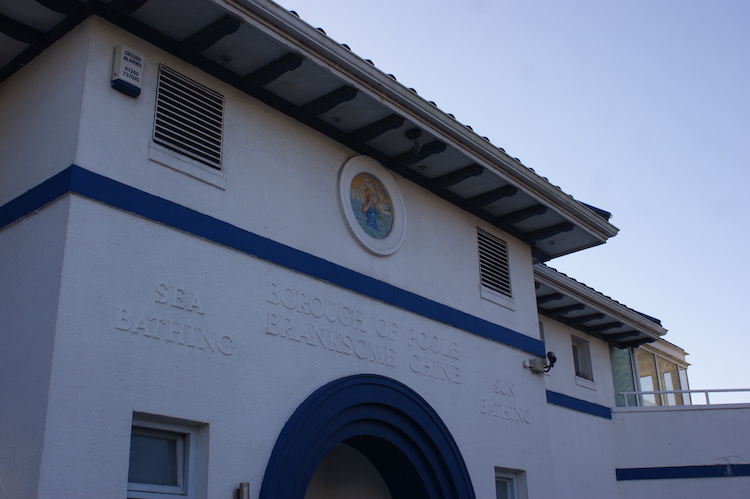
3. Britain’s first solarium
Blessed with some of the area’s finest views out to sea, Branksome Beach restaurant opened in 1932 as Britain’s first solarium providing ‘facilities not only for sun and sea bathing in Summer, but also for basking in the sun, free from cold winds, in the Winter and for taking artificial tonic sun baths.’ With separate dressing accommodation for ladies and gentlemen, in keeping with the propriety of the age, the solarium’s ultra-violet sun lamps offered all-year sun bathing so that users might absorb the ‘health-giving beams of the artificial sun’ with sand underfoot, deckchairs and refreshments on hand beneath the trademarked Vitaglass of the tea lounge. However, the concept imported from continental Europe proved too much too soon and before long the Mayor accepted the authorities ‘had miscalculated the public taste’ as the solarium was converted to the much-loved seaside dining establishment it remains today.
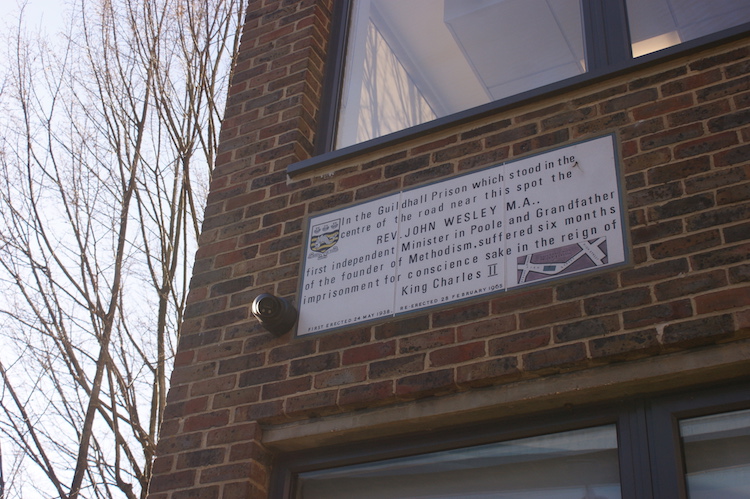
4. Fish Street Jail
Thought to date from 1569, Poole’s old Town Hall in the middle of Fish Street incorporated a subterranean prison in which the Rev John Westley*, grandfather of the founder of Methodism, was imprisoned for six months as a prisoner of conscience. Westley was Poole’s first dissenting minister and like many such non-conformist clergy in the reign of Charles II frequently found himself in breach of the law. At some point around 1920, for no known reason, Fish Street was renamed Castle Street where a plaque commemorating the incarceration was put up in 1938 and replaced in 1965. The Town Hall and jail were demolished when the new Guildhall opened in 1761 that was, noted Hutchins, ‘spacious, and… ornamented with chandeliers and sconces’.
*John Westley suffered many imprisonments and died young. His son Samuel, also a preacher, changed the family name to Wesley. His second surviving son, also John, founded Methodism.
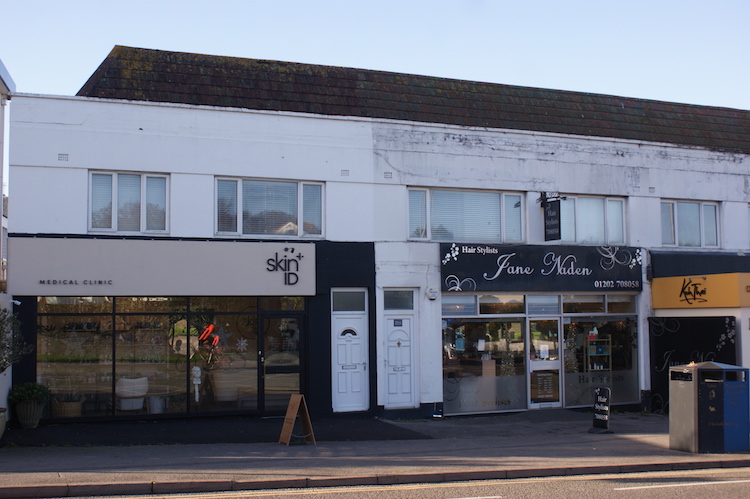
5. Fred Karno lived here!
There’s no blue plaque, but this unassuming shop front was home to one of the biggest showbiz names of his age – Fred Karno. While his name remains synonymous with organisational chaos, the original Fred Karno’s Circus was a highly successful touring company run by the theatre impresario widely credited with originating slapstick comedy in the late Victorian era and discovering the likes of Charlie Chaplin, Stan Laurel, Will Hay and, later, Flanagan and Allen. With the advent of cinema his biggest stars found fame in Hollywood where, briefly, Karno joined them before returning to his native land and uniting the three double acts that became the original Crazy Gang. But when his 1936 film project Mother, Don’t Rush Me failed, the debt-ridden Karno turned to the Music Hall Benevolent Fund and was bought a part-share in Lilliput Wine Stores at 296 Sandbanks Road. Charlie Chaplin was said to have contributed £1000. Fred and his wife Marie, who had married in Parkstone in 1927, lived at 294 Sandbanks Road, but in the 1939 Register, established soon after the outbreak of war in September, they were at 24 Dorrich Court, Wharfdale Road where Fred died in straitened circumstances, aged 75, in 1941.
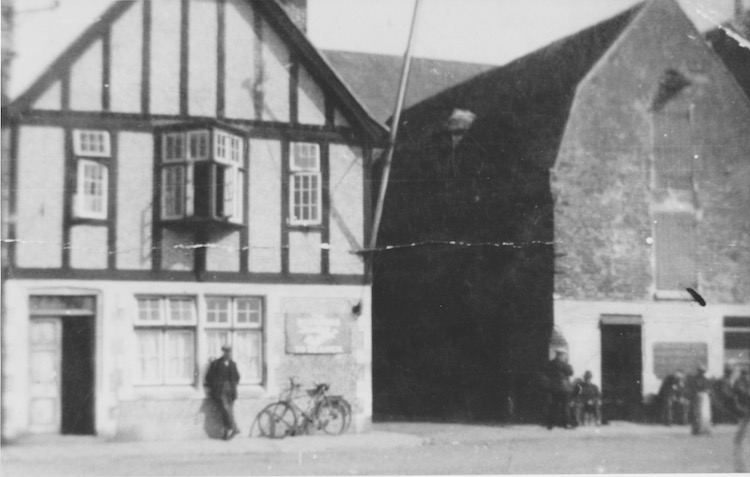

6. Home of the Flying Angel
Countless visitors to Poole Quay have availed themselves of refreshment at this well-established restaurant, as they have done for more than 160 years. But where now it seeks solely to quench physical thirst and hunger, once this building ministered to spiritual needs as well. The home of Poole’s Mission To Seamen, with its famous Flying Angel logo, from its founding in 1860 until 1948, this was where sailors came to meet most of their spiritual or material needs. The Mission’s lay readers would visit ships to distribute Bibles and prayer books and to invite sailors to services at the Institute, where they could also find food and drink, a library and games such as billiards. With its main entrance on the Quay, a door to the right led to a coffee bar behind which was a large hall with a stage at one end where concerts and entertainments were held and upstairs was a vestry with a small bay window overlooking the Quay and the chapel behind it with the altar and pulpit at the far end. Today, a mural commemorates the building’s historic connection to the Flying Angel.

7. Murder most foul
Poole’s last beach before it gives way to the hot spots of Bournemouth, Branksome Dene Chine is every inch the picture postcard tourist trap, but its dramatic cliffs overlook a dark and deadly secret history. It was here on Wednesday 3 July 1946 that Doreen Marshall, a former Wren, was murdered by sadistic killer Neville Heath. She had been staying at the Norfolk Hotel in Bournemouth when she met ex-RAF officer Heath and agreed to go to tea and then dinner with him, but instead of walking her back to her hotel he lead her to Branksome Dene Chine where her mutilated body was found days later by a dog walker next to a rhododendron clump. By then Heath had already been arrested for the murder in London of film extra Margery Gardner and although he was also charged with Doreen’s killing he only stood trial for the first murder. Found guilty he was hanged on 16 October in Pentonville Prison. The case fascinated Alfred Hitchcock who based his 1972 film Frenzy on the story.
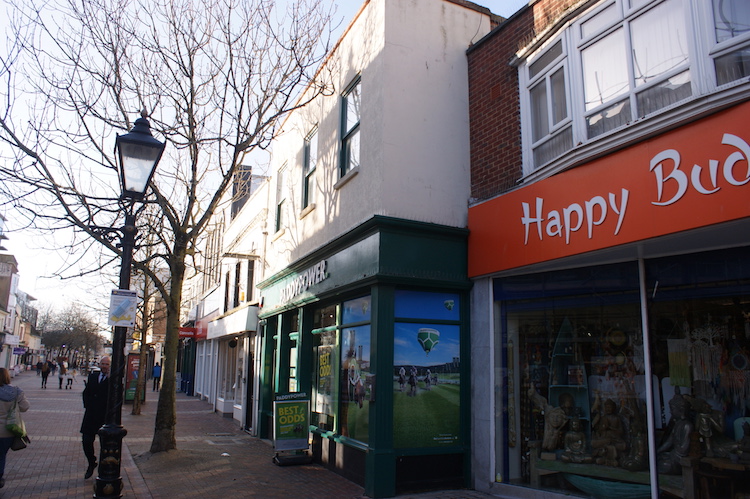
8. First bombs dropped on Poole 1940
Poole may not have suffered as horribly in World War 2 as other port towns such as Southampton, Portsmouth, Plymouth, Bristol and Liverpool, but it did not escape the attentions of the Luftwaffe altogether. In the first air raid on 21 August 1940, a lone Junkers 88 dropped seven bombs on the town. The first hit a bomb shelter in the playground of South Road School. Mercifully no children were hurt, but it blew a crater some 35 feet wide and flying concrete killed Frederick Landray in his garden nearby. Two more bombs fell in Globe Lane and 84 High Street, where the Fifty Shilling Tailor’s took a direct hit, leaving the street strewn with tailors’ dummies in a terrible reminder of what might have been. However, in Market Street, Pauline Fairbrother was killed when a bomb destroyed her house and the one next door. Three more bombs fell in West Street, West Shore and West Quay Road, causing damage but no fatalities.
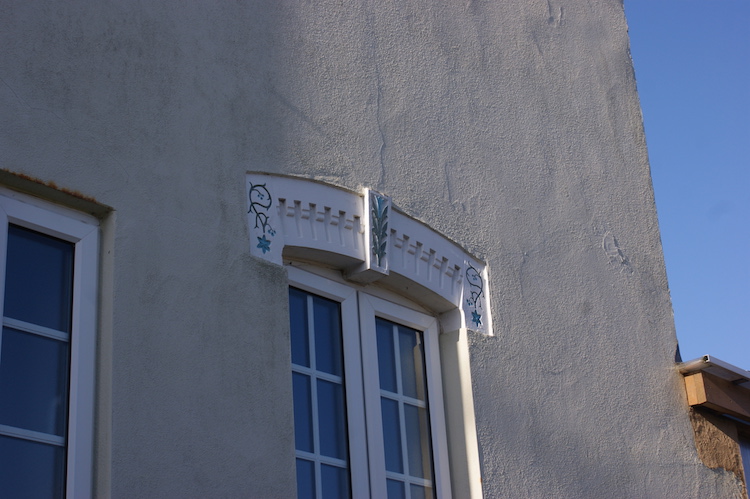
9. Flushed with success
Founded in 1856 by George Jennings, the South Western Pottery was built on land south of Ashley Cross on what had been Myrtle Farm and the Malmesbury and Parsons dairy and is now the Conifer housing estate. It specialised in terracotta work – many examples can still be seen on local houses, not to mention the eagles placed on the gateway to Poole Park at a cost of £5 5s each. The main building was three storeys high and at its peak had 12 kilns and six chimneys. Clay was dug from pits 100 feet away then transported by horse-drawn tramway and finished products taken to a purpose-built quay at Salterns on a narrow gauge railway later extended to reach the new mainline Parkstone station. Jennings held a number of patents, most notably as the inventor of the first public flushing toilet shown at the Great Exhibition of 1851 when 800,000 visitors each spent 1d (a penny) to use the facility. By the turn of the century the Jennings company was also producing acid-resistant stoneware for clients including the cordite factory at Holton Heath. It was taken over by Thomas Wragg in 1903 but continued trading as Jennings until the factory closed ahead of the site’s sale for housing in 1967.
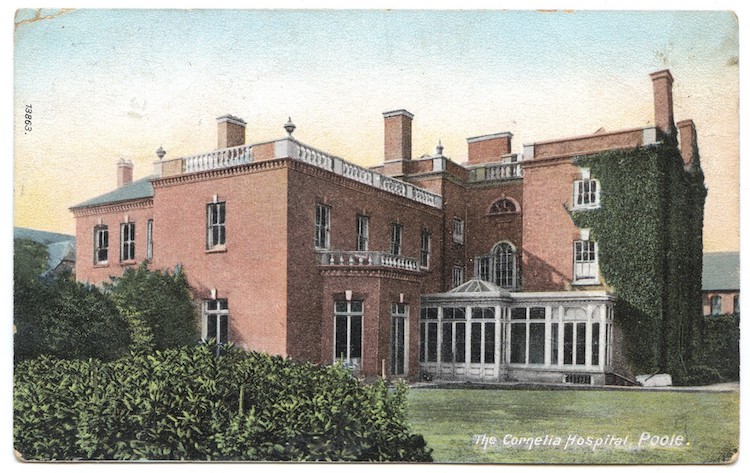

10. Cornelia Hospital, Market Close
Long before the NHS was conceived of, public health was largely a matter of charity and in the Victorian era particularly that meant the philanthropy of the wealthy. Few were more active in that regard than Lady Cornelia of Canford, daughter of the Duke of Marlborough and aunt of Winston Churchill, she was a tenacious pursuer of good causes. The precise dates are unclear, but having bought two houses in West Street and established a surgery in 1888-89, by late 1890 she had persuaded her husband Ivor Guest, Lord Wimborne, to buy the splendid Poole Mansion, a Georgian town house built by 18th century merchant and antiquarian Sir Peter Thompson at 67 Market Close. There she set up a hospital of 30 beds and, with ownership transferred to a trust in 1897, Cornelia Hospital served the people of Poole until 1907 when it relocated to larger premises Longfleet Road donated by Lord Wimborne. At the dawn of the NHS era the Cornelia was renamed Poole General Hospital and gradually demolished in the 1960s to make way for the purpose-built building opened on the site by HM The Queen in 1969. The building in Market Close is now number 25 and is used as private offices.
• Full version of article first published by Dorset Life The Dorset Magazine.
you are right i was one of the 1966 oriiginal apprentices from devilbiss mr polly the 2nd in command was george hallett the instructors i remember mr freeman holmes king holloway osman
Hi Nick,
Read your notes on the Cornelia Hospital, Market Close with interest. In 1967 I was there being trained in my first year as a Technical Apprentice. I believe Poole Tech had started using it as an Industrial Training Centre in 1966 and they left in 1969 when the workshops at the new built college were completed. I worked for Penny and Giles but there were First Year Apprentices there from, Hamworthy Eng, Deville BlissIt and many other local companies. The man in charge was Mr Polly and among the trainers were several interesting characters!!
It is an interesting footnote to this building. We were told that it had been use to convalesce WW1 solders.
I think it would be interesting to expand the article on Cornelia Hospital, to include this closing use?
Regards,
Roger Newnham