There’s only one animal in the whole of creation that enjoys an adolescent phase – homo sapiens. That’s you and me.
We take twice as long to grow up as our nearest relatives, the great apes, who develop gradually from birth to adulthood. Humans, on the other hand, have spurts of growth and while our adult behavioural patterns are developing we cannot easily fend for ourselves so we stay small and youthful for longer, motivating our parents to continue looking after us.
Thanks dad! Thanks mum!
So there have been teenagers for as long as mankind has walked on two legs… but they’ve only been called teenagers for the last 50 years.
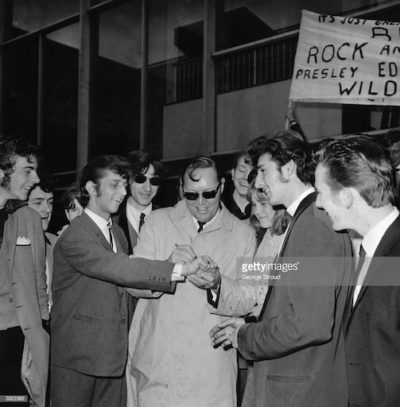
Internet-based market research company YouGov, working with PR agency 3 Monkeys Communication, has identified February 1957 as the birthdate of the British teenager. That was when American rocker Bill Haley arrived at Southampton docks to become the first major US rock star to tour Europe. The tour kicked off with three sellout shows at Southampton Gaumont and by the time Haley and his Comets reached London by train they were mobbed by thousands of screaming fans in the first display of teen-mania.
Some papers dubbed it the second Battle of Waterloo.
And so began half a century of outlandish hairstyles, bus shelter fumbling, raging hormones and sulking in bedrooms. Or did it?
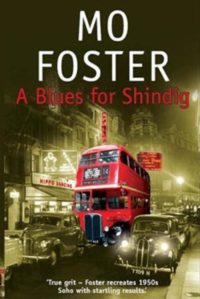
“Don’t be silly, there was nothing new about any of it – it was an invention of the media and the marketing industry,” says Bournemouth author Mo Foster, whose debut novel, A Blues For Shindig, recounts her colourful teenage escapades in 1950s Soho.

“I wasn’t there to greet Bill Haley, wouldn’t have been seen dead near that. I was much too busy being seduced by real sex and drugs and rock n’ roll in Soho. Haley looked like an old man even then and his music was bland. What was new, of course, was that teenagers weren’t called teenagers until the late 1950s, when they were identified as a viable and lucrative market by the sales people.
“It was all about marketing.”
The word “teenager” is first recorded in a 1941 Reader’s Digest, but is thought to have been coined a few years earlier. Certainly, the word “teenage” had been in use since the early 1920s to describe the years 13-19, but the grown up world still considered the teen years to be nothing more than an extension of childhood.
Of course, teenagers had been getting up to all sorts for generations, they just chose to forget about it once they assumed the mantle of adult responsibility. British teenagers were asserting themselves at least 20 years before Bill Haley arrived on these shores.
The apprenticeship strikes of 1937 saw boys across the country uniting to fight for higher wages in jobs they were genuinely interested in. Many 1930s teenagers rejected the advice of the Juvenile Employment Bureau to seek “progressive” jobs as clerks and apprentices and went instead for better paid “blind alley” jobs as van boys and messengers.

The juvenile labour market was buoyant and they could always pick up an apprenticeship when they reached 16, having left school at 13. They also forged their own independent culture around the cinema and dance halls.
“In the war, people behaved abominably,” laughs Mo.
 “You could be dead tomorrow so why not live today? There was all sorts of deviant behaviour going on. By the mid-50s the adults had got it all a bit more organised. I remember working in a bar when Elvis’ Heartbreak Hotel came out and as soon as it went on the jukebox everyone under 20 would be up and dancing.
“It was Elvis and James Dean in Rebel Without a Cause that got the mass market teenagers moving, although people had been running away from home, listening to black American blues and all sorts of things for years. As a suburban girl all I had was Junior Miss and all that – it was terrible. A lot of people went to the dances at the local Palais and a lot of them got stuck there, which was a shame. I went straight to the main attraction – Soho – and had a terrific time.
“They were very subversive times if you knew where to look – the beatniks and the early Aldermaston marches started in the late 50s.
“There was danger as well. The Teddy Boys looked beautiful all dressed up, but they were mainly fascists going round beating up the blacks and so forth.”
British teens’ 12 greatest moments
1957: Bill Haley and the Comets first UK tour.
1959: Hula Hoop craze. The first big teen fad took its name from the Hawaiian dance its users imitated.
1963: Beatlemania. Fleet Street’s finest came up with the description after the screams and sobs of Beatles fans drowned out their heroes’ concerts. Regularly adapted to suit the band of the moment – T Rex, Bay City Rollers, Bros, Take That etc 1964: Mods and Rockers. Well established youth cults take the bait and fight each other for the benefit of a media in mock outrage on the beaches of England.
1967: The Summer of Love. The Mods and Rockers ape their west coast American cousins and grow their hair, smoke dope and politicise casual sex.
1972: David Bowie admits his bisexuality. Glam rock shifts a gear as Bowie puts sexual orientation to the front of his audience’s impressionable teenage minds.
1977: Punk. “No Future!” snarls Johnny Rotten as the Sex Pistols celebrated the Silver Jubilee with safety pins, swear words and lucrative furore.
1978: Grange Hill. The first weekly drama aimed squarely at young teens was set in a tough London comprehensive school.
1982: Boy George on Top of the Pops. The original mass market gender-bender’ upped the ante proclaiming he’d rather have a cup of tea than have sex.
1988: Acid House. A combination of electronic music, a new drug (ecstasy) and a largely self-generated music scene mobilised a generation to head for the fields to dance all night to repetitive house music, wave glow sticks around and wind up the government who passed the Criminal Justice and Public Order Act effectively outlawing outdoor dance parties.
1995: Britpop. Oasis v Blur; Ginger Spice’s Union Jack dress; Kevin the Teenager; Jarvis Cocker at the Brits… Cool Britannia was on the horizon as Tony Blair prepared for government.
2006: Online social networking. Text messaging, MySpace, YouTube – British teenagers assimilate technology quicker than ever before and often make highly creative use of it. That is if you consider dropping mints into bottles of cola and posting films of the explosive results on the internet to be an act of creativity.
• Information from 3 Monkeys/YouGov
• First published by Bournemouth Echo.
• Mo Foster, novelist, playwright, poet, Loud Woman and Original Teenager, died on 26 January 2018, leaving (with Tubby) for the skies that she so imaginatively painted through her words. RIP Mo, was a pleasure to have met you.