
MICHAEL Heesy shares most of the every day worries that trouble us all. He worries about paying his bills, getting the shopping and doing the garden. He worries about his little terrier Sadie and how his friends are. He worries about the state of the nation and what the hell George Bush was doing in this country last week.
The one thing he doesn’t waste time worrying about is Human Immunodeficiency Virus, or HIV, and yet he was diagnosed HIV positive some 25 years ago and has lived with the spectre of Aids for more than 30 years.
American-born Michael submitted to a neurotoxicity test called HVLT3 while at college in Santa Monica in 1972. He had a problem with recurring sores on his ankle. The test was found to be positive. Several years later, in 1979 he was living in Palm Springs and still suffering from ankle sores. He agreed to another test, which came back positive. The test was for HIV. He was HIV positive. In the late 1970s, understanding of HIV and Aids was in its infancy. The medical profession was only just getting to grips with it, many politicians and the vast majority of the public had never even heard of it. Aids had only been identified and named a couple of years earlier to cover a range of opportunistic diseases born of an immune system defect. Treatment was limited to powerful drugs aimed at bolstering the immune system.
“I am epileptic and have always taken medication for that. I won’t take any other medication and have refused all their drugs for more than 30 years. I live on a strict regime of vitamins, I eat very healthily – everything I am meant to – and have stayed healthy for over 30 years,” he says.
“When I got sick back in 1972 I went to the doctor because I have got bronchial pneumonia every year since 1950 and I thought it might be that. He gave me four huge shots of pure penicillin and I couldn’t sit down for a week!
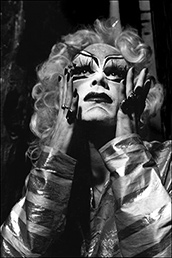 “It was like a second stage syphilis. I believe HIV is a conglomeration of all the sexually transmitted diseases you have when you’re younger. I had gonorrhea and syphilis and they stay in the blood stream. I may not display the symptoms but the virus stays in my blood.”
Michael, who has been celibate since the early 1970s, has been offered the leading anti-Aids drugs including AZT and Septrin. He has had a bottle of Septrin in his medicine cabinet for 12 years. He won’t take them. One doctor told him he should – even though he would almost certainly suffer more epileptic fits, seizures and black outs as the medicine reacted with his anti-epilepsy drugs.
“I think I would be dead if I had taken them. So many friends have done exactly what the doctors told them to do and took all their pills and now they’re dead. I didn’t used to tell people I am HIV positive unless I had to. I had an epileptic fit once when I lived in Cambridge and fell down a flight of stairs. I had to tell the people I lived with not to touch me. Then I passed out.
“In hospital they did more tests on me, including an HIV test. When it came back positive they moved me to the terminal illness ward where my visitors had to dress in paper suits. There is terrible ignorance and prejudice. A good friend of mine, a neighbour, found out he was HIV positive. I heard a gunshot and went next door to find his brains all over the floor. That kind of thing makes one very sad.”
Michael’s vitamin regime includes daily doses of: 1,000 units of vitamin C buffered; 1,000 units of vitamin E before bed; Chlorella 15 tablets as an immune booster; 500ml bee propolis; three alpha and kelp tablets; garlic pills; bee pollen tablets; RNA/DNA – also a booster; natural bee pollen; and multivitamins. Once a month he takes a ten-day course of royal jelly and has a vitamin B12 booster every three months. He drinks only filtered water.
“The brain is a large part of this. I believe if your brain tells you you’re sick then you will be sick. Similarly, if the brain tells you you’re well then you will be well. Everyone should have a goal. I always said I could not die until I had walked through the Valley of the Kings in Egypt; and I haven’t done that yet so I can’t die.”
More people than ever before in the UK are likely to have tested positive for HIV over the last year. Latest figures suggest that more than 6,000 new cases will have been reported last year – the highest ever. Of the new cases, more than two thirds are heterosexual. Today, more than 40,000 people in this country are living with HIV, but if the current rate of increase continues, by 2005 that figure could be as high as 65-70,000.
Around 400 people die each year from HIV-related causes and government spending on HIV awareness and condom promotion has decreased, yet the epidemic is far from over. People with HIV live longer, but more people than ever are testing positive. The largest growth area for new cases – and indeed for all sexually transmitted infections (STIs) – is in young heterosexuals.
The second National Survey of Sexual Attitudes and Lifestyles found an increase in condom use offset by rises in the number of partners and prevalence of potentially risky sexual behaviour. This week, Health Secretary John Reid announced an extra £15 million to tackle HIV/Aids as well as STIs like syphilis, gonorrhea and chlamydia.
Locally, the numbers of new cases of HIV have risen by 30 per cent since March from 192 to 240 patients – about seven new patients a month.
“Bournemouth has the fourth largest gay community in the UK and that still impacts on our HIV figures; and 25 per cent of our cases are in people from sub-Saharan Africa,” says Dr Elbushroa Herieka, HIV consultant for East Dorset.
“There is a lot of risky behaviour out there and as soon as you take your condom off you are open to a range of diseases. We have recently fought very hard to control an outbreak of syphilis in Dorset. Once it became widely known that HIV can be controlled with tablets people started to view as no more serious than diabetes, but the message has to be that it is still a chronic illness, an incurable disease. It will kill you. People must practice safe sex and take care about what they do.”
Barbara Heffernan, development director of Body Positive Dorset, says awareness of sexual health is as poor as it was 15 or 20 years ago.
“What we lack at the moment is a really good, simple, effective educational campaign,” she says. “Ten years ago, when I first got involved with voluntary work with HIV/Aids organisations, awareness was quite high. Young people knew about safer sex and practiced it. Today, a whole generation has grown up that knows very little about it.
“We have seen a rise in new service users over the last year regardless of age, sexual orientation or ethnicity. This year we have had seven Aids-related deaths in Dorset compared to just two last year – and those are just the ones we know about.”
Body Positive Dorset has registered 233 service users who can seek advice, help, counselling, alternative therapies and respite care at its Bournemouth centre. Barbara says there is at least another hundred local people who haven’t registered or who go outside the area for care.
“We contacted all the bars and clubs in Bournemouth and invited the managers and staff to come in for our open day to pick up information about HIV and Aids and not a single one of them came along. The message is so simple – if you have sex, wear a condom.”
Body Positive would like to see free condoms available in bars and clubs across the area.
“As a nation we have gone back to a drinking and drugs culture and there is a huge bar culture in Bournemouth now. If there were free condoms in bars in Bournemouth it would make such a difference,” says Body Positive vice-chair, Jonathan.
“People think Aids has gone away because where is its public face? In the States there are public health adverts on bus stops, in buses, on TV, everywhere. Once people know about it, it is then up to them what they do with that information, whether they follow the advice or not. You can’t dictate to people how they behave, but what you can do is make sure they know how to be more healthy.”
Holistic therapist James Cooper, from Tony’s Holistic Centre in Southbourne, says he has achieved lasting results in the treatment of people living with HIV by using a simple water and salt therapy.
“It’s a very specific formula of water and pure salt that is designed to get the water and salt balance in the body back to its correct level,” he says.
“If you are dehydrated the body is in shutdown mode anyway so it is susceptible to infection. We can’t talk in terms of cure, but we can say that we have been able to greatly alleviate the symptoms and vastly improve the body’s ability to deal with those symptoms.”
James has clients who are HIV positive but show no sign of the Aids virus. He also has clients who have the Aids virus, but are not HIV positive. He says the HIV test will detect the presence of HIV antibodies, but the diagnosis of Aids is made through a leap of faith not scientific fact.
When a new theory is brought to science it should conform to Koch”s Postulate which says that the cause of the disease must be found in every case of the disease. The Human Immunodeficiency Virus is not found in every Aids case. What is found is the anti-body required to fight HIV. In other words, according to James, the presence of the HIV antibody means that at some point the body detected HIV and sent out killer T cells to combat the virus. Having defeated it, the body developed antibodies to fend off any future outbreak.
“What that means is that the presence of HIV antibodies is actually a sign of health, that the body’s immune system was working. We would never tell people not to take their combination therapy, we advise them they should concentrate on building their immune system by eating properly and cutting out lifestyle behaviour that damages the immune system.”
It’s no shock to find conspiracy theories abound, even less surprising to find them on the internet – load the word ‘aidsgate’ into an internet search engine and see what happens.
But whatever sinister movement is perceived in the shadows of our understanding, as far as Michael Heesy is concerned he is alive and, more importantly, well. Whatever he is doing is working for him and that’s what matters to him. He’s chosen a lifestyle that is right for him and it’s one he is as comfortable with as he is ever going to be.
“I am happy. A little lonely, but I’m happy. It’s my choice to be this way. To be honest, gay people are not drawn to me because I was a princess. The only ones who liked me were other queens and while that may be fun when you’re young, you get older and it’s not attractive.
“I’ve been to HIV and Aids groups and have been told there wasn’t much they could do for me as I’m not sick. Which is the whole point. It was nearly 25 years ago that I was told I had five months to live, but, unless I’m a ghost, here I am!”
• First published Bournemouth Daily Echo November 2003
extract of profile feature 2002…
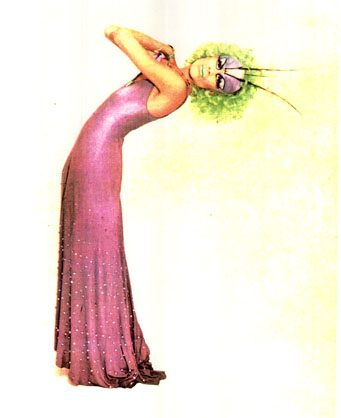
Michael’s teacher was Montgomery Clift”s cousin who took Michael to meet the great movie star and his then houseguest, HRH Princess Margaret.
His best friend and regular beach buddy was Lana Turner’s daughter Cheryl Crane who, notoriously, killed her mother’s gangster boyfriend Johnny Stompanato in 1958 by stabbing him after he had rowed with her mom.
Inevitably, he gravitated towards the first flushes of the hippie scene in San Francisco in the mid-60s. Openly gay, he immersed himself in the counterculture.
He changed his name to Goldie Glitters, lived his life in drag and joined the nascent Cockettes drag troupe. A loose collective of like-minded hippie drag artists (or, as Michael prefers, self-styled male actresses), the Cockettes started life doing a can-can dance to a Rolling Stones song before a film show at the Palace Theater.
Their fame spread rapidly from the centre of the hippie world and they came to personify the underground on the cusp of change from the psychedelic paisley swirls of the fag end of the 1960s, to the exuberantly camp hedonism of the 70s. Within months they were writing, staging, producing and selling out their own stage shows.
Michael – or Goldie as he had become – wanted to be a star. The only way he was going to do that was to simultaneously consume and reject the collateral pleasures available to his circle.
“You name it, I’ve tried it. But I didn’t really get involved with drugs because I’m epileptic and have to take medication for that, so other substances could kill me.
“There was one guy – a dealer – we called Doctor John who lived in a fabulous mansion and would throw these parties. At midnight he would appear with a giant cake covered in icing laced with LSD!
“That’s what I hate about the drugs thing – it makes people do such stupid things. These people were saying to me: ‘Well, maybe you’re not such a hippie as you thought.’ Yes, maybe I’m not, but at least I am alive and going to be a star while they’re all dead.”
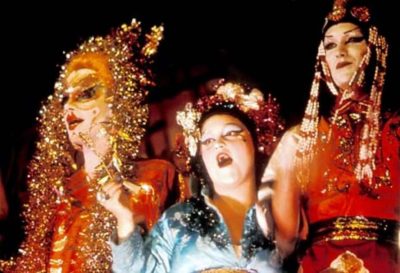
His fellow Cockette, Sylvester, died of Aids in 1988 after hitting the pop charts with disco hits like You Make Me Feel Mighty Real and Do You Wanna Funk.
Aids also claimed the lives of several other Cockettes. Of those missed by Aids, most of the rest were taken by drugs. Michael is one of a tiny few left alive.
“They have tried to get me on AZT and Septrin. I was taken to hospital in 1993 with a collapsed lung and told I should go on AZT, but I wouldn’t.
“A year later they wanted me to go on Septrin even though they told me I would get more seizures but wouldn’t get the pneumonia that kills many people with Aids. Well, I’ve had attacks of bronchial pneumonia every year since 1950 and it’s never killed me, so I took my chances again.”
Like many other people with HIV/Aids he has also suffered at the hands of the rude, the cruel and the ignorant. On one occasion some friends took him to dinner with the heir to the Hershey confectionery empire.
“This woman had the most fabulous dinner service – thousands of dollars worth. We had dinner, which was very nice and afterwards the conversation came round to my being HIV positive. She got up and smashed every piece of that dinnerware that had touched my skin.”
More than 30 years after it ended, there is sadness that many of Michael’s friends have now gone. There is sadness that he is no longer as young as he was. There is sadness that the hippie dream was hijacked by bread-heads and the Cockettes fell apart in 1972 in a welter of bickering, financial mismanagement and general bitching.
Lift his head from the down side though and the extravagantly elegant Michael happily recalls the better times. The sense – however vague – of creating change, of making things happen, of getting it together fills him with pride.
The Cockettes were right there at the birth of Gay Liberation, not preaching the militant rhetoric of their East Coast cousins, but preaching a gospel of acceptance.
“Well, the war was on – that’s Vietnam – and we wanted people to laugh more. We were all in our early 20s and we had a fabulous time,” says Michael, who met, befriended and recruited the legendary Divine soon after the Cockettes started.
“He went on to bigger things with films like Hairspray and Pink Flamingos, but when I knew Glen – that’s Divine – he was just so outlandish, so outrageous there weren’t many who could handle him.
“I lived with Glen; he was my best friend. We would go down to this shop on Market Street in San Francisco every Saturday to get makeup and stuff and opposite was a steak house that would feed you all you wanted for $5 – and Glen would eat a lot. He weighed 325lb when I met him. When he died he weighed 375lb.”
There was no way the Bay Area could contain Goldie, Glen and the rest of the Cockettes. The Los Angeles chief of police threatened to arrest them for indecent exposure, and hounded out of town, but reports filtered back to the movers and shakers of America’s cultural capital, New York. Barbra Streisand and Truman Capote saw the show in Frisco and an off-Broadway run was hastily arranged.
The cream of Big Apple society turned out for opening night, including John Lennon, Angela Lansbury, Gore Vidal and Anthony Perkins.
It was a disaster. The critics slated the show.
“They thought we were doing things cheap and trashy, but that was just our way. Some of the Cockettes got upset but I said that as long as they took notice of us, everything was fine. It’s when they won’t even write about you that you should start crying.
“Angela Lansbury started catcalling from the audience. I was on stage at the time and asked who was calling out. I said: ‘That can’t be Angela Lansbury as an actress of her stature would never appear so drunk in public!’”
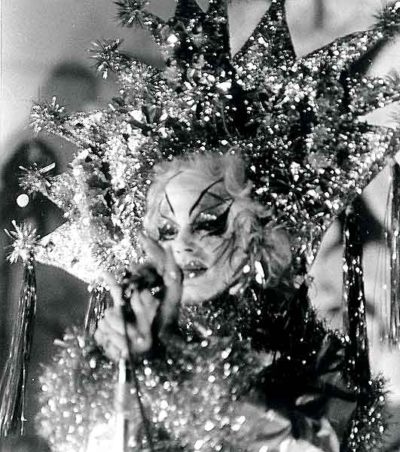
But, if the snobbish dilettantes of the Upper East Side turned their noses up, the cool underground was rapt. The show ran for three weeks and the Cockettes found themselves adopted by the artisans. Goldie ended up very good friends with Andy Warhol courtier Holly Woodlawn.
“It was party, party, party. Tina Turner gave me this ring. She has one too and said that if she had it then Goldie should have one as well. Andy was weird though, weirder than you can ever imagine. I don’t think I ever heard him speak.”
In a kind of recherché post mortem, the culture vultures have finished picking over the corpse of the Cockettes and now declare them ‘Ahead Of Their Time’. A feature-length documentary, Cockettes: The Movie was shown at the recent Gay and Lesbian Film Festival in London and Michael returned to Goldie’s blondest locks to take a standing ovation.
But there’s not much of a career for an ex-Love Crowd luminary. He tried a few shows on his own, but faced criticism of betraying the Cockettes’ ideals. Disheartened, he quit California and headed for Houston to work as a real estate manager. His travels brought him to England, via Florida, 11 years ago and he’s never left. He wrote to the Queen Mother twice a week and has a fine collection of letters in reply.
“I always wanted to meet her, but that’s one of those things that will never happen. I have some lovely letters – a few from her but mainly from ladies in waiting.”
It’s a long way from the Haight Ashbury to Ashley Road, but whether holed up in his humble semi or traversing Parkstone’s commercial heart, Michael cuts a striking figure with his six-foot-plus frame and shock of bleached hair with turquoise streaks. He’s still a star.
“I love the stage. I love the glamour and the mystique, but most of all I love the applause. I always wanted to be famous. I just didn’t know how to go about achieving it.
“You could be in the movies and get a million dollars a movie but when do you hear the applause? I’ve had a wonderful life and met some fabulous people and it’s not over yet. I’d love to get a company together and I’m in the process of writing a show, but you have to find the right people. There would be rows, I know, but what rows they would be!”
• Michael died in Dorset on 9 October 2005. He was 59.
Michael g heesy was my first cousin. His brother Jimmy sister judy
This article is lovely. I mean really. Micheal was my uncle. I was born in 1971 in LA and his brother and mom made every effort that I not know him. They moved us to Montana for christs sakes. I was able to form a very sweet but short relationship with him while he was in England, during his last couple years.
I know NONE of this. I feel so much closer to him and understanding what he was telling me and of course my folks as well. We didn’t have google back then. Took me too long to look tho.
I’m really glad I found this. I sent it to my queer son. I think he’ll find himself in awe as I am right now. I’m in Portland Or. I hope this letter finds you well and thank you.
xoxo
tessa bird heesy