It’s a place like no other, certainly not in this part of the world. The echoes of a way of life long since past rattle around its part-renovated ruins. There is a strange, uneasy peace as if the place itself is all too aware of the contradictions brought to bear upon it.
Cradled in the long arms of the Purbeck hills, Tyneham Valley is a land that time forgot and has only recently rediscovered.
Sixty years ago, on December 19, 1943 the villagers of Tyneham and the farmers in the surrounding valley – not to mention the Bond family that occupied Tyneham House, one of Purbeck’s most impressive country houses – left their homes for the last time. They were never to return.
Tyneham Valley was requisitioned by the War Department and turned over to British and American troops for extended exercises in the run-up to D-Day.
Despite a solemn promise delivered by the government of the day that the village would be returned to its inhabitants at the end of the war, it has been retained as part of the Lulworth gunnery range ever since.
That chill December day at the height of World War Two was treated much like any other by the departing villagers. Some left their bicycles propped against garden walls; others opened windows in their cottages to air stuffy rooms. As the last of them left, one pinned a notice to the church door. It read: “Please treat the church and houses with care. We have given up our homes, where many of us have lived for generations, to help win the war to keep men free. We shall return one day and thank you for treating the village kindly.”
Photographs taken by the US military at the end of the War suggest that, by and large, the troops did indeed treat the village with care.
And yet Tyneham has lain dormant ever since. Its one-time residents carried on the winds of change until but a few remain living anywhere near the decrepit rows of cottages, fallen-down walls and long-overgrown paths.
The lingering arguments over its return ran out of steam years ago – a campaign lead by Dorset author Rodney Legg in the late ’60s and early ’70s took the matter to Westminster. It was decreed that Tyneham should remain under the wing of the military as no practicable way could be found for Tyneham to make sense in the modern world.
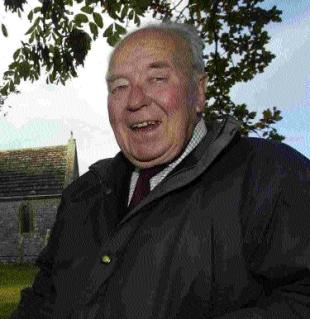
Indeed, it was woefully behind the times even in the 1920s and ’30s when Arthur Grant was growing up in its kindly bosom.
“There was no gas or electric; no running water. We lived down by the stream and had to collect water from a tap in buckets. The toilet was outside – a bucket covered by a wooden bench. The only heat we had was from open fires and there was only one coal delivery made a year. That came by steam wagon and my father had a ton and a half at a time. We kept it in the pig sty at home,” says the 81-year-old retired photographer who now lives in Wareham with his wife Grace. They celebrated their golden wedding earlier this year.
Arthur’s father and mother, Harry and Marjorie, had moved to Tyneham in 1924 when Harry took over the position of woodman at Tyneham House. Arthur was two years old and stayed in the village until he went to sea 13 years later as a salon boy on the Union Castle shipping line.
“I remember it as a happy time. Everything revolved around the church and Tyneham House. Nobody owned their own homes – except The Bungalow, which was Mrs Wheeler; and Sheepleaze which was Draper. As kids we played and got up to mischief but it was mostly related to the chores we had to do.
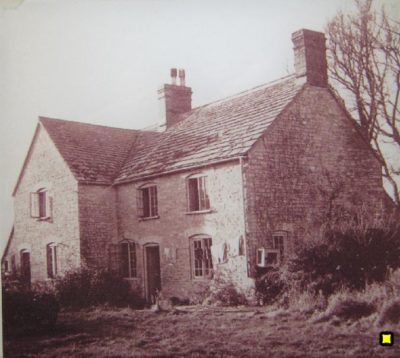
“We grew vegetables and at potato time I had a terrible job doing battle with whinnyweed – bind weed – which grew all over the place.”
Although the village had a small post office cum general stores – three people would fill the shop floor – most of the villagers’ groceries came from delivery runs made by Head’s of Stoborough and Cooper’s of Corfe Castle who would take an order one week and deliver it the next.
But the young Arthur was an enterprising soul. He found out that Farmer Smith, or Leath’ry Weskit as the kids called him, used to charge visitors in cars to open gates for them. It wasn’t long before Arthur was charging drivers sixpence a gate to open every gate from the main road on Creech Hill down to the Row, the first phalanx of cottages that greets the visitor to Tyneham.
“Old Jack Miller, who lived in Sea Cottage, used to let us have an old boat and we’d go mackerel fishing out in the Bay. Then we’d slide down the hill on sheets of galvanised steel. We’d go sticking – picking up sticks in the woods or out of the hedgerows – to bring home as kindling for the fire. I sang in the choir and when my voice went I turned the organ in the church.
“And my thoughts always go back to Tyneham at Christmas because we had such fun carol singing.
Nobody thought anything of walking in those days and we’d go all over the village, up to the House of
course and even over to Kimmeridge. We had flasks of tea and mince pies as we went. Beautiful times.”
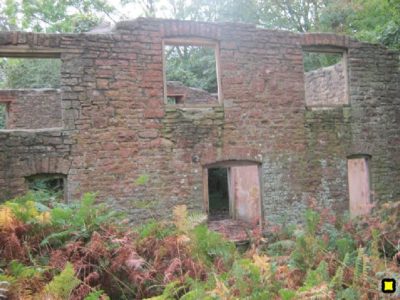 Tyneham School closed (because of declining numbers) in 1932 as, although few were listening, the bells already tolled for Tyneham’s end. The children were bussed to Corfe in search of education and the school enjoyed a brief period of revitalisation as a village hall; while the horse chestnut that overhung the playground (and still does) was spared the attentions of the village’s conker-knights on weekdays.
There are those who have argued that the world of Tyneham was big enough for its inhabitants. Not so. Even something as small as travelling to Corfe to school was enough to broaden horizons. Suddenly the world didn’t seem so small to Arthur Grant.
He left school and took his first job, as a pantry boy at Tyneham House which was then leased to a South African doctor called Hans Sauer.
“I eventually became under footman and had a room at the House to live in. There were so many servants. It was my job to polish shoes and clean knives, as well as polishing the dining room table. I remember once being sent for a bottle of port from the cellar, but I disturbed it on the way back up and I had to go back for another. That’s how I learned about crusted port!”
But Arthur had made an impression on the lady of the house, Cecilia, who offered him the chance to join the family at their Irish home when the lease on Tyneham House expired. He turned it down but accepted her offer of an introduction to her brother, a captain on the Union Castle line.
And so began the Merchant Navy career that meant he missed the evacuation of Tyneham.
“We were running troop ships during the War – I got badly bombed off the coast of Ireland once – but it meant we could be away for six months or more at a time. When I came home on leave I would call my grandfather who had the post office at East Stoke and he would come and pick me up from Wareham in his baby Austin. He always grumbled that he couldn’t fit my trunk in the car!
“Then one time he came to collect me and told me we weren’t going back to Tyneham but that I should ask my father why not. That was how I found out. It was a shame, but then I’d left Tyneham in search of adventure and things had to move on I suppose.
“Yes, the government broke its promise and it probably should have been returned to the villagers, but it wasn’t to be. I find it a little upsetting to go back there now because you can hardly see the old place. They’ve done such a lot of work in making it safe, but of course I still see it as a living, breathing place. My home.”
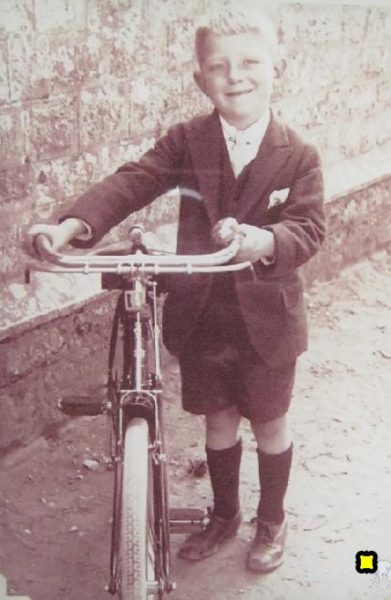
Some 40 odd homes were evacuated in 1943. Of the 225 displaced persons, many had been born in Tyneham or the surrounding valley. Some had never been as far away as Wareham; a few had never even left the village.
Ironic then that Arthur should have made his early adult life travelling the world – first as a merchant seaman on ships from Southampton to South Africa, then after the war as a steward on the Quantas Empire airline that flew former RAF flying boats and converted Lancaster bombers on passenger runs from London to Sydney.
We sit talking over old times and he shows me a list of the places he has visited. From Calcutta to Cape Town; Delhi to Durban he has set foot on most of the Earth’s continents and many of its countries; and yet, at the age of 81, he finds himself in a small market town just a few miles from his boyhood home.
We talk about the day he met the Queen (on a royal flight in 1954), how he took his young wife Grace to Australia; we mull over the receipt for his kit items when he joined the Merchant Navy, and yet the conversation repeatedly returns to Tyneham.
Not so much to the big events, but the incidentals to everyday life that add so much colour when viewed through 60 years of hindsight.
The village was almost the final resting place of feudal England. Its lords and masters – the Bond family – reigned over the valley for hundreds of years.
The Bonds’ rule was one of kindly concern and benevolence, the easy paternalism that ensured the survival of the status quo. A place for everything and everyone in their place. Even the church – where one would have thought all would be equal in the eyes of the Lord – has its own entrance for the Bonds to the private chapel.
“It’s strange that Tyneham fills such a big space in my life yet I didn’t live there very long really. It felt like home,” sighs Arthur.
There’s no place like home… and there’s no place like Tyneham.
• Article and 2003 image of Arthur Grant first published in Bournemouth Echo. Other images from Tyneham OPC.